
A storm rolls through, the lights go out, the freezer is holding onto its temperature, and you’re left wondering in the dark when the electricity will come back on. This is a scenario many envision when considering battery backup. Residential batteries can be charged directly from the grid or paired with a solar system, giving you a way to store electricity and have it available when you need it.
But what if your battery could support the larger grid picture outside of your home?
What is a Virtual Power Plant?
A Virtual Power Plant (VPP) connects multiple distributed energy resources, such as home batteries. Instead of only operating independently to the homes they’re attached to, participation in a VPP coordinates these resources to support the greater grid. During periods of high electricity demand, stored energy from participating batteries can be sent back to the grid to reduce the overall demand and strengthen the existing infrastructure.
Essentially, this network of smaller energy resources can work together to provide the same benefits as a traditional power plant. They help manage peak demand and increase overall grid reliability.
How Batteries Support the Grid
A home battery stores electricity, whether it's from excess solar production or pulled directly from the grid to charge up (ideally at non-peak times), allowing the home to pull from this storage on demand when needed – in a power outage, during high-cost electricity times for those with variable rates, or after the sun sets and their solar array is no longer producing.
In a VPP, during certain periods of high grid demand, a utility or program operator may request access to some of that stored energy. The battery can discharge this electricity support to the grid, according to the programs’ settings and requirements. Participation heavily relies on the battery equipment, and the homeowners preferences. Not every battery automatically participates in a VPP!
Duke Energy EnergyWise Home Program
Duke’s EnergyWise Home Program gives North Carolina homeowners monthly bill credits for allowing Duke Energy to temporarily make adjustments to select smart appliances in your home (think thermostat, HVAC, water heaters, battery backup). If your battery backup is enrolled, an agreed upon portion of stored energy from enrolled batteries would be accessed during times of high electricity demand in exchange for monthly credits toward your bill. This program helps support the grid when electricity is needed most, while homeowners still maintain a reserve of stored energy for their own use. Supporting the greater good, while maintaining your own resilience and peace of mind!
EnergyWise Home Vs. PowerPair: What’s the Difference?
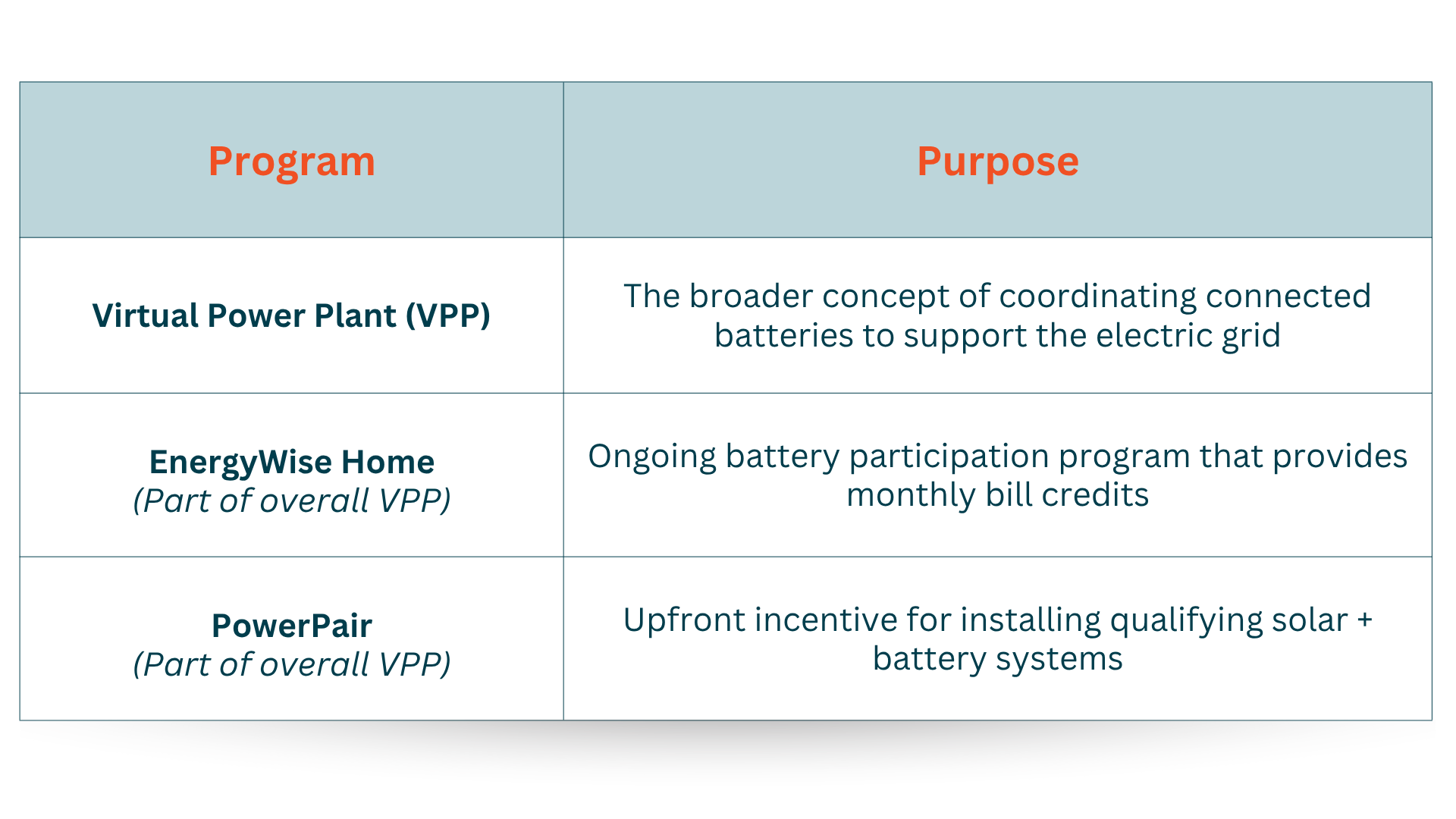
While both programs are connected to battery storage and a part of Duke’s VPP program, they serve different purposes.
EnergyWise Home is an ongoing participation program. Instead of receiving an upfront rebate for installation, Duke Energy Progress offers monthly credits to those who enroll their appliances. For battery backup this means you grant Duke the ability to charge, discharge and temporarily adjust specific battery settings between 30-36 times per year.
*For Duke Energy Carolinas customers, this program is called Power Manager. Click here to learn more.
These control events are spaced out through the year:
Winter Season: November - March: Up to 18 times
Summer Season: April - October: Up to 18 times
You may opt out of up to four events each year, and the program won’t discharge your battery below a 20% state of charge – still leaving you power for when you need it!
And yes, enrolling multiple batteries = higher credits.
Duke Energy PowerPair, on the other hand, is a rebate program with an upfront financial incentive to qualifying homeowners who install a new solar and battery system. It’s designed to help make adding solar and battery storage to your home more affordable.
PowerPair helps offset the initial cost of installing a solar and battery backup system, while EnergyWise Home provides an ongoing incentive for grid-support participation. Sugar Hollow Solar is here to help you walk through what’s available for your home, and how to apply!
Note: PowerPair is a limited capacity program. As of October 2026, Duke Energy Carolinas customers may still qualify for PowerPair, but Duke Energy Progress customers are not currently eligible to apply.
What This Means for the Grid
As electricity demand continues to grow, utilities are looking for ways to manage the increasing strain on the grid. Traditionally, they have relied on large power plants to generate additional electricity during periods of peak demand.
Virtual Power Plants are a modern approach, coordinating thousands of smaller energy resources to replace traditional power generations, and for homeowners, this means a battery can serve more than one purpose. Just as it can provide backup power when the electricity goes out, it can earn bill credits and serve the greater good when using clean energy from solar!
As our communities’ power demands grow, these connected systems can play an increasingly important role in how electricity is managed and distributed.
Battery Storage for Your Home
Sugar Hollow Solar offers three residential battery backup options: Tesla Powerwall, FranklinWH, and SolarEdge Nexis. Whether installed as a standalone system or paired with solar panels, each option offers different capabilities to meet your home’s energy needs!
Not sure which battery is right for you? Our team can help you compare options and find a solution. Beyond providing backup power during outages, home batteries can:
offer greater energy independence and resiliency
provide flexibility in how you manage your electricity
store excess solar energy for later use
save you money! As utility rates continue to go up, you can lower your electric bill by using your stored solar power after the sun goes down.
If you’re interested in adding battery storage to your home, contact Sugar Hollow Solar to schedule a free consultation!